
“All too often, elections serve merely to give autocratic regimes a veneer of legitimacy. But elections without integrity cannot provide the winners with legitimacy, the losers with security and the public with confidence in their leaders and institutions.” Reflections of María del Carmen Alanis Figueroa, author of Access to Justice and Electoral Integrity
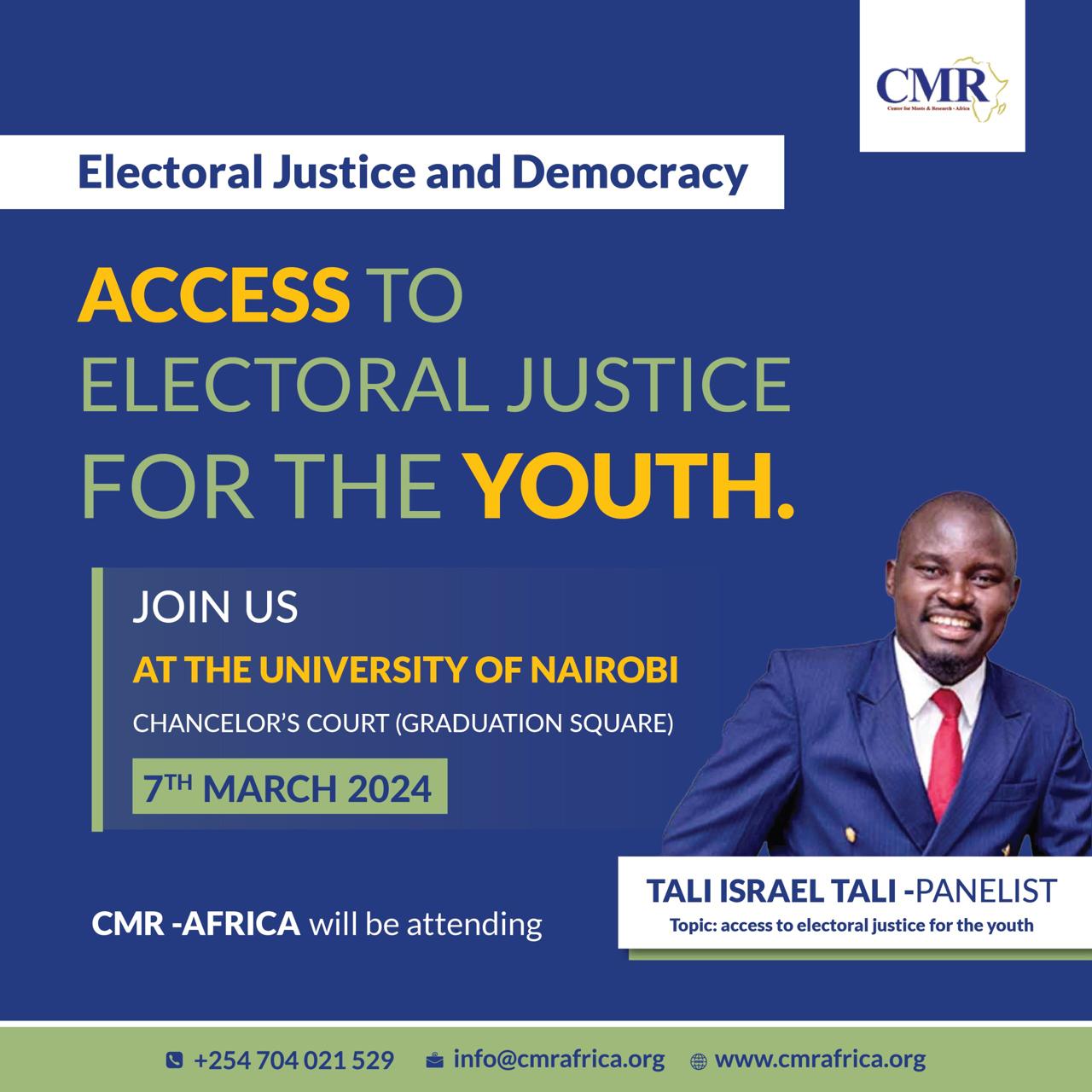
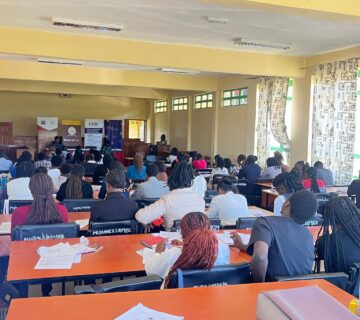
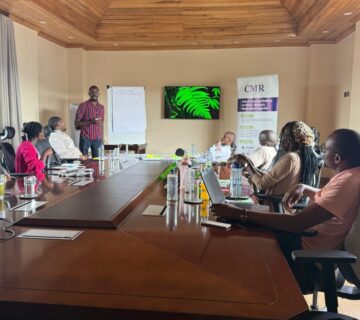
We took part in the recently concluded People’s Dialogue Festival where we had an opportunity to delve into a crucial topic: “Electoral Justice among Kenya’s Youth.” Our presentation was a testament to the vital role of the youth in ensuring credible elections and ensuring fairness and accountability in the electoral process.
In our presentation, we underscored the importance of credible election dispute resolution mechanisms to address grievances arising from electoral processes. By ensuring procedural fairness, impartiality, and transparency, these mechanisms not only uphold the rights of candidates but also safeguard the interests of the entire electorate. They serve as pillars of trust, bolstering public confidence in the electoral process and legitimizing the outcomes, whether it be the election of representatives or the annulment of results. Moreover, constitutional dispute resolution mechanisms guarantee peace and order in times of transition, more so in fragile democracies that have borne the brunt of post-election violence such as Kenya. Unresolved electoral disputes are a catalyst for violence and pose serious national security threats and therefore, absent such mechanisms, Kenya would easily descend into anarchy.
Echoing the wisdom of the Supreme Court of Kenya in Odinga & Another v Independent Electoral and Boundaries Commission & 2 Others; Aukot & Another (Interested Parties); Attorney General & Another (Amicus Curiae), we affirm: ‘Elections are not events but processes.’ Disputes are therefore inevitable at all stages of the electoral process right from planning, recruitment and training of election officials, voter registration, nominations, campaigns and ultimately voting on the election day.
For there to be access to justice in these processes, parties must have the ability to obtain redress both through either formal or informal institutions and three things must exist:
- Availability of the redress system and whether it can be pursued without any impediments;
- The efficiency of the available system and its capability to address the grievances; and
- The sufficiency of the existing system.
Kenya has in place various mechanisms to redress election disputes both at the pre-election stage and at the post-election stage. Pre-election dispute resolution mechanisms including internal dispute resolution mechanisms within political parties, the Political Parties and Disputes Tribunal, as well as the IEBC Dispute Resolution Committee. At the post-election stage, elections courts are the only arbiters as at this stage, the disputes will be election petitions.
Despite all the efforts in place, some barriers still stand in the way for the youth in accessing electoral justice. These include;
- Lack of awareness of the existence of the mechanisms especially the pre-election dispute resolution mechanisms.
- Lack of representation.
- Lack of awareness on legal information and how the system works.
- Procedural requirements such as timelines which are often strict.
- Financial barriers such as filing fees.
- Knowing the appropriate forum.
At the core of these barriers are elections without integrity and as CMR-Africa, we believe that civil education on election dispute resolution mechanisms and the procedures involved is a key tool to help in dealing with these barriers. As such, we endeavor to work with all available and willing partners to ensure we create the conditions for legitimate elections.





No comment